Source Adjustable Velvet Bar Chair for Kitchen, Living Room, Bedroom
Explore 30 adjustable velvet bar chair options from verified suppliers. Buyers can compare features like armrests, padding density, and materials to find the right fit for home offices, dining rooms, or kitchen spaces.
Key considerations
Products List
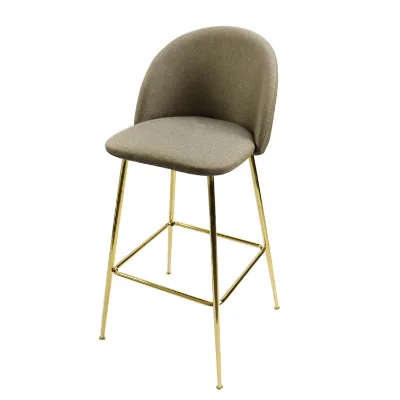


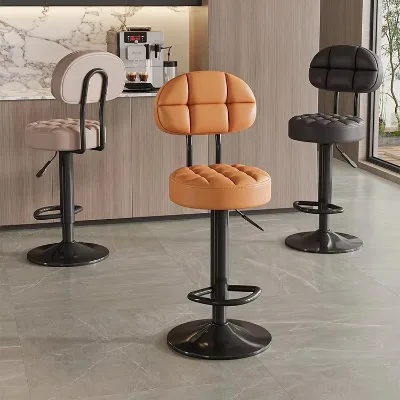


Comprehensive Sourcing Guide
Strategic Sourcing Guide for Adjustable Velvet Bar Chairs
Understanding Technical Specifications and Design Variations
When sourcing adjustable velvet bar chairs, buyers must first navigate a complex landscape of technical specifications that define the product's functionality and aesthetic appeal. The core keyword implies a specific intersection of materials, adjustability mechanisms, and structural integrity. Based on available market data, the term "adjustable" in this context often refers to height-adjustable mechanisms, typically found in rotary or fixed-base designs. The supply chain presents distinct variations in base construction, with some models utilizing a fixed rotary mechanism while others offer a fully rotary capability. This distinction is critical for end-user experience; a fixed rotary base may provide stability for high-traffic commercial environments, whereas a fully rotary base offers greater flexibility for residential or lounge settings.
Material composition is another pivotal specification. The market data indicates a divergence in frame and upholstery materials. Some units are constructed with metal frames, providing a robust industrial aesthetic and high durability, while others feature synthetic leather or genuine leather upholstery. The padding density also varies significantly, with options ranging from medium-density foam to high-density foam. High-density foam is generally preferred for long-term comfort in settings where the chair will be occupied for extended periods, such as home offices or dining rooms. Conversely, medium-density foam may be suitable for decorative purposes or shorter-duration use. The dimensions of these chairs are not uniform; observed specifications include models with dimensions around 5050106 cm, while others offer a broader range such as 48(L)*50(W)*90-110(H)*60-80(SH) cm. This variability underscores the necessity for buyers to verify exact dimensions against their intended space, particularly regarding seat height and overall footprint.
The following table summarizes the observed technical variations in the current market to assist in specification alignment:
| Feature Category | Observed Variation A | Observed Variation B |
|---|---|---|
| Base Mechanism | Fixed Rotary | Fully Rotary |
| Frame Material | Metal | Metal |
| Upholstery | Synthetic Leather / Leather | Velvet (implied by keyword) |
| Padding Density | Medium-density Foam | High-density Foam |
| Armrest Configuration | With Armrest | Without Armrest |
| Color Options | Black, Gold and White | Customizable per request |
| Typical Dimensions | 5050106 cm | 48(L)*50(W)*90-110(H) cm |
Compliance, Certification, and Safety Standards
In the B2B procurement of furniture, particularly items intended for public or commercial use, compliance with safety and quality standards is non-negotiable. While specific certification documents are not universally listed for every product variant, buyers must rigorously verify that the supplier adheres to recognized industry standards. The market data references "Standard size" and "Factory standard" as common descriptors, but these terms are generic and do not guarantee compliance with international safety regulations such as those regarding flammability, structural stability, or chemical emissions.
Buyers should explicitly request documentation proving that the metal frames meet specific load-bearing requirements and that the upholstery materials comply with relevant flammability codes, especially if the chairs are destined for hospitality or commercial venues. The origin of the products, frequently cited as Hebei or generally China, suggests that suppliers may be subject to different regulatory frameworks depending on the destination market. For instance, export to the European Union or North America often requires specific testing for formaldehyde emissions in the foam and stability tests for the base.
Furthermore, the customization aspect of these chairs introduces a layer of compliance complexity. When a buyer requests a custom color or specific dimension, the resulting product must still meet the baseline safety standards of the original design. Buyers should ensure that the customization process does not compromise the structural integrity of the metal frame or the fire-retardant properties of the velvet and foam. It is advisable to require a third-party test report for the specific custom configuration before placing a large order, rather than relying on the test results of a standard model.
Cost Drivers and Pricing Dynamics
The pricing of adjustable velvet bar chairs is influenced by a multitude of factors, creating a wide observed range from 10 to 120 USD per unit. This significant variance is not merely a reflection of brand markup but is driven by tangible differences in material quality, manufacturing complexity, and order volume. The primary cost driver is the upholstery material; genuine leather commands a premium over synthetic leather or standard velvet, and the density of the foam padding directly impacts the perceived value and comfort level. A chair with high-density foam and a solid metal frame will naturally sit at the higher end of the price spectrum compared to a model with medium-density foam and a lighter gauge metal frame.
Order volume is another critical determinant of unit cost. The market data reveals a wide range in Minimum Order Quantities (MOQ), spanning from 2 units to 2000 units. Suppliers often employ tiered pricing structures where the unit price decreases significantly as the order volume increases. For example, an MOQ of 200 pieces is common for standard models, while some suppliers may offer a lower entry point of 100 pieces or allow for mixed orders to fill a container. Buyers must calculate the total landed cost, including the unit price, shipping, and duties, rather than focusing solely on the sticker price. A lower unit price on a small order may result in a higher total cost per delivered item due to disproportionate shipping fees.
Additionally, the level of customization required will impact the final price. Custom colors, specific dimensions, or unique branding on the packaging (e.g., "1PC/CTN" vs. bulk packing) often incur additional setup fees or higher per-unit costs. The delivery time, observed between 20 to 45 days depending on the order specifics, also plays a role in cost management. Rush orders or expedited shipping can significantly increase the overall procurement budget. Buyers should align their order timing with their inventory needs to avoid premium shipping charges and to leverage the most favorable pricing tiers offered by suppliers.
Typical Applications and Market Segmentation
Adjustable velvet bar chairs are versatile products designed to serve a diverse range of applications, from residential interiors to commercial hospitality venues. The market data indicates that these chairs are marketed for use in kitchens, home offices, living rooms, and bedrooms, highlighting their adaptability to modern home furniture trends. The "Modern" style and "Comfortable" features make them particularly suitable for contemporary interior designs that prioritize both aesthetics and functionality.
In the commercial sector, these chairs are frequently utilized in dining rooms, coffee bars, and lounge areas. The availability of armrests in some models and their absence in others allows buyers to select the appropriate configuration for the specific environment. For instance, a coffee bar might prefer chairs without armrests to maximize seating density, while a high-end dining room might opt for models with armrests and high-density foam for enhanced guest comfort. The "Bar Stool" and "Velvet Bar Chair" designations suggest a primary focus on elevated seating, which is essential for counter-height tables and bars.
The customization options further expand the application potential. Suppliers offering "Customized" services can tailor the chairs to match specific brand identities or interior design themes, making them ideal for boutique hotels, corporate offices, and themed restaurants. The color options, ranging from standard black to custom requests like gold and white, allow for seamless integration into various design schemes. Buyers should consider the durability requirements of the intended application; high-traffic commercial areas may require the more robust metal frames and synthetic leather options, whereas residential use might prioritize the aesthetic appeal of genuine velvet and leather.
Supplier Evaluation and Verification Protocols
Selecting the right supplier is a critical step in the procurement process, requiring a thorough evaluation of their capabilities, reliability, and transparency. Buyers should prioritize suppliers who provide clear and detailed product specifications, including exact dimensions, material compositions, and packing details. The presence of specific model numbers, such as DC-21, DC-41, or A1631, indicates a structured product line, which is a positive sign of a professional supplier. However, buyers must verify that the specific model number corresponds to the exact specifications they require, as variations in dimensions and materials can exist even within the same model family.
Transparency regarding the production origin is another key factor. The data indicates that products originate from Hebei and China, regions known for furniture manufacturing. Buyers should verify the specific factory location and inquire about the supplier's quality control processes. A reputable supplier will be willing to share information about their production capacity, lead times, and quality assurance measures. The observed delivery times of 20 to 45 days suggest a standard production cycle, but buyers should confirm if this timeline includes packaging and loading or if it is purely manufacturing time.
Furthermore, buyers should assess the supplier's flexibility regarding customization and order volume. The ability to accept mixed orders or fulfill large container loads indicates a supplier capable of handling complex procurement needs. It is also essential to verify the supplier's communication responsiveness and their willingness to provide samples before bulk production. Samples allow buyers to physically inspect the quality of the velvet, the stability of the metal frame, and the comfort of the padding, ensuring that the product meets their expectations before committing to a large order.
Quality Control and Long-Term Procurement Considerations
Implementing a robust quality control (QC) strategy is essential to mitigate risks associated with bulk furniture procurement. Given the variations in materials and construction observed in the market, buyers should establish clear QC checkpoints before, during, and after production. Pre-production inspections should focus on verifying that the raw materials, such as the metal grade and foam density, match the agreed-upon specifications. During production, random checks should be conducted to ensure consistency in assembly, upholstery stitching, and finish quality.
Post-production inspections are equally critical. Buyers should verify the packaging integrity, as the data mentions "Carton" and "1PC/CTN" packing methods. Proper packaging is vital to prevent damage during transit, especially for items with velvet upholstery and metal frames that can be susceptible to scratches or dents. Additionally, buyers should test a random sample of the finished goods for stability, weight-bearing capacity, and comfort. The "New" condition of the products implies that they should be free from defects, but rigorous testing ensures that this standard is met.
Long-term procurement considerations involve building a sustainable relationship with the supplier. Buyers should evaluate the supplier's ability to maintain consistent quality over time and their capacity to scale production as demand grows. The observed MOQ ranges suggest that suppliers are willing to accommodate different order sizes, but buyers should negotiate terms that allow for flexibility in future orders. Establishing a clear communication channel and agreeing on a standardized process for handling defects or returns will also contribute to a successful long-term partnership. By focusing on these strategic elements, buyers can ensure a steady supply of high-quality adjustable velvet bar chairs that meet their specific market needs.
FAQs
What are the standard dimensions for these chairs?
Standard dimensions vary by model, with common sizes like 50*50*106 cm or 48*50*90-110 cm. Buyers must verify specific model numbers like DC-21 or DC-41 to ensure the exact footprint fits their intended space before ordering.
Can I customize the color and material of the chair?
Customization is available for colors like black or gold and white, and materials include metal frames with synthetic or genuine leather. Some models are non-customized, so buyers should confirm the specific customization status for their chosen product model.
What is the minimum order quantity for these bar chairs?
The minimum order quantity ranges from 2 to 2000 pieces depending on the supplier and model. Common MOQs are 100 or 200 pieces, with some options allowing mixed orders to fill a full container for larger procurement needs.
How long does delivery take for these furniture items?
Delivery times typically range from 20 to 45 days depending on the specific order and production schedule. Some suppliers list a shorter window of 25 to 30 days, so buyers should confirm the exact lead time before finalizing their purchase.
Which padding density options are available for comfort?
Padding options include both high-density foam and medium-density foam to suit different comfort needs. High-density foam is generally preferred for long-term use in home offices or dining rooms, while medium-density foam suits decorative or shorter-duration applications.
Where are these adjustable velvet bar chairs manufactured?
Products originate from Hebei and other regions in China, as indicated by the product origin data. Buyers should verify the specific factory location to ensure it aligns with their logistics and compliance requirements for international shipping.